
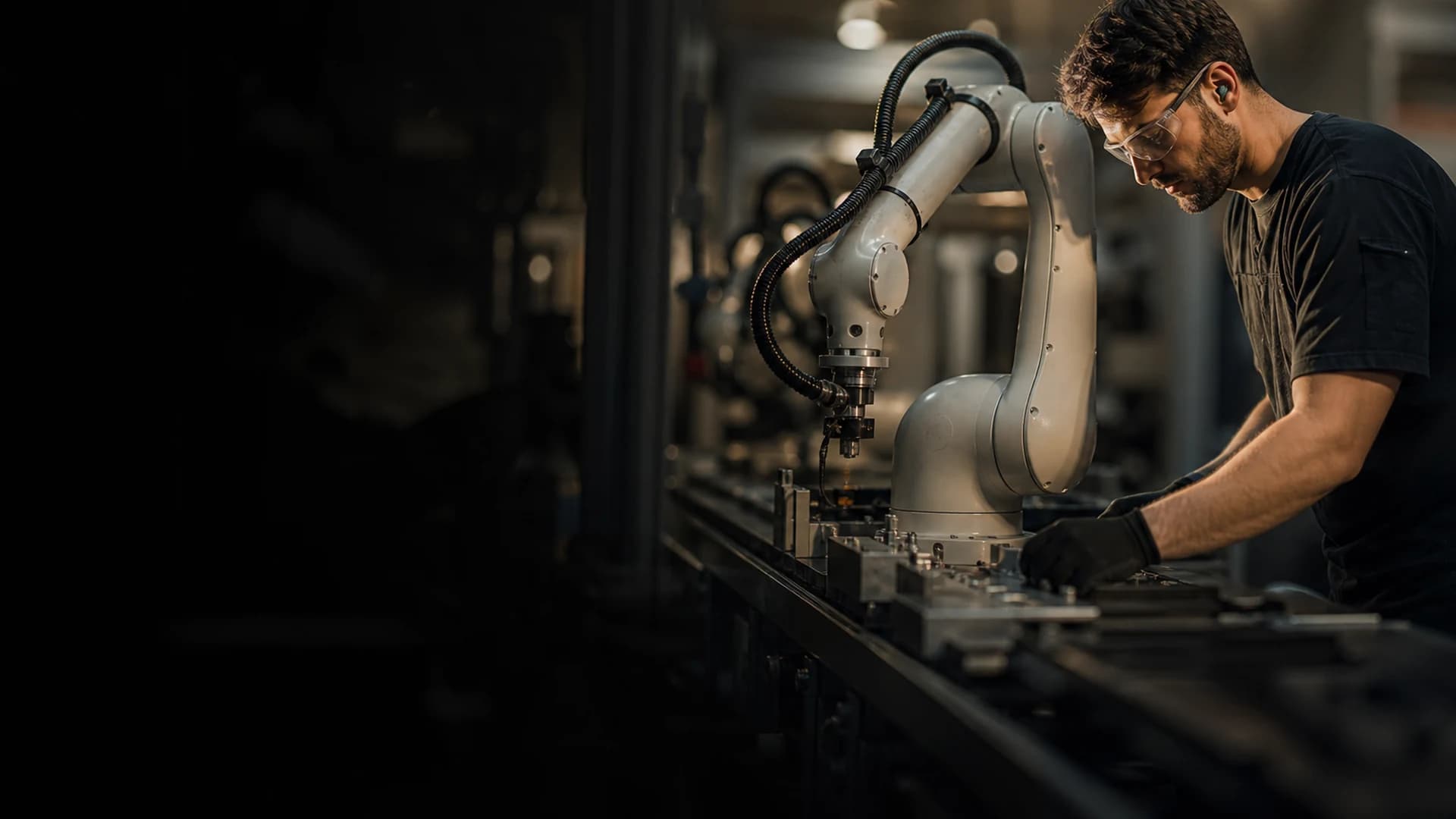
- Automation fear is rational, but the layoff is a framing choice, not a property of the technology.
- Like the McDonald’s kiosks, automation pointed at growth raises throughput and funds more roles, not fewer.
- Responsible deployment — upskill ahead of the install, redeploy not discard — is the competitive edge, not a cost.
A few weeks ago an executive stood on a conference stage, told the room that AI would reshape their industry, and got booed. Not heckled by a fringe — booed by a crowd of working professionals who heard one thing in the word "automation": my job is next.
That reaction is not ignorance. It is pattern recognition. For thirty years the business case for new technology on the floor has been written in the same language — headcount reduction, labor savings, FTEs eliminated. When the people doing the work hear "we're automating," they have every reason to assume the spreadsheet justifying it has their name in the minus column.
Here is the contrarian part: the layoff is a framing choice, not a law of the technology. And the framing you choose decides whether the change creates value or destroys trust.
The kiosk that was supposed to kill jobs
When McDonald's rolled out self-service touchscreen kiosks, the consensus was blunt: cashiers were finished. A decade on, the surprising thing happened instead. Average checks went up — a screen patiently upsells the large fry and the extra shake in a way a rushed teenager at a register never could — and the staff who would have stood at that register were redeployed to guest-experience and table-service roles that didn't exist before. The technology didn't shrink the business. It grew the basket, and the labor moved to where humans add value the machine can't.
The kiosk didn't replace the worker. It replaced the transaction, and freed the worker for the part that actually builds the business.
The factory's basket size is throughput
Translate that to the plant floor and the parallel is exact. A restaurant's lever is average check. A factory's lever is throughput — the rate of sellable output. Automation pointed at a stable, well-sequenced process raises throughput the way the kiosk raised the basket: more value out of the same footprint.
And more throughput is the thing that actually protects and creates jobs. A plant running more product through the same building is a plant that wins the next contract, adds the second shift, justifies the new line. Growth funds headcount. Contraction cuts it. Automation that grows throughput is on the side of the people, if leadership frames it that way and means it.
This is the difference between making the pie bigger and fighting over a smaller one.
New org models are real — but the chart is not the framing
None of this means the organization stays still. The structural thinkers are right that roles will change. Salim Ismail's work on exponential and AI-native organizations argues the traditional org chart is becoming obsolete as machines absorb coordination work. Block reorganized itself by function and flattened layers around the same logic.
But notice what Block paired its reorg with: layoffs. New role definitions and a leaner chart can be a way to grow into new capability — or a cost story wearing the costume of transformation. The org model is a tool. It is neutral. The framing around it is what people actually experience, and the framing is a leadership decision, not an output of the technology.
The responsibility that earns the change
If automation can grow the pie, then doing it responsibly is not soft — it is the actual job. Three commitments make the difference, and all three are leadership's to keep before a single piece of capital is approved:
Sequence it right. Solve the problem first, then automate. Automating a broken process doesn't save labor — it bakes the dysfunction in at higher cost and hands people a reason to distrust the next change too.
Upskill ahead of the install, not after. The guest-experience lead and the line technician who now runs three cells instead of one are not accidents. Someone trained them, on purpose, before the machine arrived. Education is a precondition of the rollout, not a severance afterthought.
Tell the truth about where the value goes. If the gain is throughput and growth, say so, and let people see themselves in the upside. If the only plan is to cut, the booing is earned.
The plants that will grow through the AI era are not the ones that automate fastest. They are the ones that fix the process, raise the throughput, and bring their people up the curve with the machine — making the pie large enough that growth, not subtraction, is the story. That is change management worth the name, and it starts on the floor, in the right order.